Not to mention quitting in droves because very many don't want to take these cases or otherwise to stand in court and explain why current admin is not bound by existing laws, court orders, the US constitution in general, or internationally recognized human rights etc.
If a federal prosecutor doesn't want to prosecute federal crimes, it's probably best for both themselves and their country if they find themselves a new job.
Out of curiosity, did you willfully choose to not understand the circumstances that prosecutors are being forced to carry hundreds of cases, too many to even read before they are in court, and then they are forced to stand in front of judges and face contempt while they are asked to explain why the government, who the prosecutor has no real control over, is violating yet another judicial order?
It isn’t just a matter of prosecutors picking and choosing…it’s underfunding, DOGE, and then those that are left are treated as adversarial the moment they complain about conditions or case loads. (Just like your comment does.)
It is only when judgement is rendered that it becomes a federal crime. Until then it is only alleged. And guess what: this administration is alleging a lot of things that fail.
This has already happened. Home PC market is practically dead already due to memory, ssd and graphics card price inflation. Makers of components like PC cases and power supplies etc. are seeing demand down 30-40% year over year and this is going to put many suppliers out of business. NVDIA has stopped even listing gaming revenue on their earnings reports. Both NVDIA and AMD are not seriously interested in supplying the consumer GPU market anymore either.
The only hope left is really Apple, but even apple has conspicuously delayed the launch of M5-gen mac minis and mac studio. Mostly because even Apple can't source enough DRAM to fully supply all their product lines.
>> find a reliable place to sell it without getting ripped off by scammers.
This is a real problem and why I've just about given up on ebay or fb marketplace, esp for computers. If you are in Canada though sellit9.com is a great solution to having to deal with sketchy buyers.
@Ademeure Where do you think the market will be by the time, say year from now, when Apple has rolled out it's M6 generation? Do you think one more process node and architecture revision will be enough yet to tip the balance that local LLM starts to go mainstream?
What this article fails to mention is that there are also a record number of empty tankers routed to the US refineries right now, with the intention of shifting still-relatively cheap US oil products to overseas markets where the prices are already much higher and shortages have already hit. The effects of the Iran war on the US economy will really start to kick in over the next several months.
California also needs a special blend that is only required in California (CARBOB). A lot of that is refined outside of the US, because there is not the capacity domestically. Cali could immediately have more fuel and cheaper prices by dropping their special requirements.
Last year there was some rumbling that Newsom would start to increase production because two refineries were closing sooner than later with the prospect of much higher gas prices. Since CA is really pushing renewables hard and transitioning off of fossil fuels, all the front runners for CA governor have indicated they are steadfastly against increasing production.
He can allow non-California-special-blend gasoline to be sold in California, as a temporary emergency measure. This does not increase any production, but it massively increases the production of gasoline that can legally be sold in California.
(As a side benefit, he can also blame the need on Trump, if the environmentalists get on his case...)
The California Air Resource Board (CARB) has promulgated a revised Cap and Invest rule that threatens the viability of the remaining refineries. All the remaining California refineries have sent CARB, the Governor and the CA legislature letters pointing this out.
California is now a net importer of gasoline following these refinery closures.
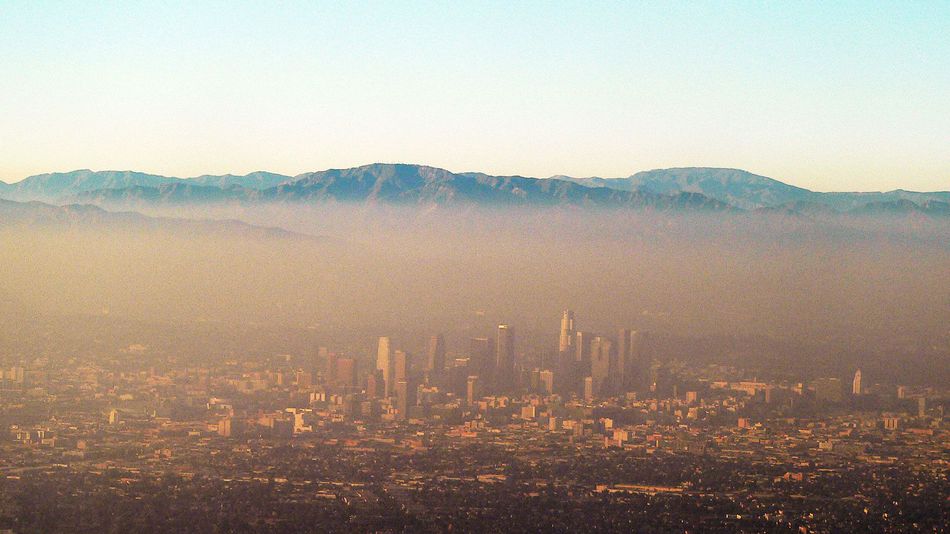
Sure but do you recall what LA looked like in the 80's? The gas is more expensive but the unseen cost of that level of pollution is very high. The gov can solve all future gas problems with EV subsidies and manufacturers can help solve this problem by making affordable EVs, but getting the current admin or manufacturers to do either seems like a cruel joke at this point. The fed is going as far as to deny Chinese car imports because the EVs are so cheap it would crash the US car industry.
Boston had a similar problem. I remember more than once coming over Belmont Hill on Route 2 and seeing this gray-brown cloud sitting over the city with the Prudential Building sticking up out of it.
The problem with Chinese imports and the American auto industry gives me serious flashbacks to the 1970s, when cheap Japanese compacts came in and took business away from American automakers.
Seems to me the American auto industry can't learn to adapt until some foreign competitor comes in and repeatedly kicks them in the nuts.
Prices just shot up over a dollar nationally and no one is burning anything down.
The real "let them eat cake" is the biggest polluters externalizing the costs of that pollution down to the people, all while the state is dismantling the EPA and clean energy.
Imagine if we had real public transportation across the nation. Less pollution AND cheaper for the average person. Wonder why that isn't happening.
Because the US is overwhelmingly urban sprawl and is not Europe. The only way to fix this is to tear down and rebuild (which we cannot afford), or accept that public transit wait times are terribly slow due to the distance between stops.
Combine that with a lack of nerve to aggressively combat crime or antisocial behavior on transit, maybe a fear of perpetuating inequality or something, and anyone who isn’t a man doesn’t feel safe trying it.
> Because the US is overwhelmingly urban sprawl and is not Europe
That's a bad excuse
a) because Europe isn't one single demographic but still public transport is useful, reliable and safe everywhere (from Dublin/Zurich on the low side of the population density scale to London/Paris/Madrid on the high side and Amsterdam/Hamburg/Prague in the middle).
and b) there are plenty of examples outside of Europe. Melbourne is urban sprawl. The metro area is 50 miles east to west, 30 miles north to south (more, but there's also a big bay) and a population of only 5 million. A lower population density than the Denver MSA but manages to run a train/bus/tram system that's useful, reliable and safe.
Between the US and Canada, Canada (with it's population the size of California) has three out of four of the highest-ridership light rail systems.
Blaming sprawl or population count, while being outshone by Canada, means it's neither of the above. Perhaps we can move on to the auto companies pushing out light rail in California in the fifties to bump their own profits, or accept that it's the American people and their ethos that has left the automobile as the claimed only option.
He's trying to control the oil that goes to China. First, take Maduro then close the Straight of Hormuz (to prevent oil going to China). The rest is just collateral damage as far as he's concerned.
This is all about keeping China down, and preserving American Hegemony. That's his definition of "making America great again". He doesn't care that you're paying more for food, gasoline, etc. and that the rest of the third world will soon be starving.
Gulf States get a swap line (can't let Wall St crash), but you get no bail out because the elites don't care that you are hurting. They care about the Gulf States hurting because that ultimately means Wall St will crash which would hurt the Billionaire elites.
So to sum up, the reason is maintain America's Hegemony and protect the Billionaire class.
We could die chocking on the air that produces too. Understand the history in CA and the reasons we have special gas. Would you really want to hurt children for cheaper gas? Really?
Those rules around special gasoline were made when both federal and California car exhaust regulations were much looser than today, and electric cars were a complete pipe dream. I've seen estimates ranging for savings from $.25 to $1 per gallon if California dropped the requirements.
>Would you really want to hurt children for cheaper gas?
You didn't really address his main point. Will this lead to higher levels of pollution that will have real health consequences? Oddly you suggest it's not valid to raise concerns around health consequences.
"Poor air quality does not affect all parts of LA equally. Communities of color and low-income residents are disproportionately impacted by polluted air. In certain areas, traffic-related emissions, including nitrogen oxides (NOx), carbon monoxide (CO), and benzene concentrations, are up to 60% higher.
A study led by UCLA found that the air in disadvantaged neighborhoods contained not only more fine particulate matter, but also more toxic particulates as well. Places facing the most socioeconomic disadvantages “experience about 65% higher toxicity than people in the most advantaged group,” according to Suzanne Paulson, UCLA professor of atmospheric and oceanic sciences and the senior author of the study.
These same groups often have less access to health care and good nutrition, putting them at an even greater health risk. Everyone deserves to breathe clean air, and communities of color and low-income residents are unfortunately facing the worst of LA’s notorious smog."
Saving a buck at the expense of someone with no control of their situation is a choice.
I'm certain the number of children suffering illness or even dying due to air pollution from Texas refineries is more than zero. Not very high, I imagine, but not zero. There is a very real human cost to these things which we really like to ignore.
I'm not sure that most voters that have lived through smog in SoCal would vote for that. It is easy to decide that its okay to pollute a place where you don't live.
> Love living in the country with the highest GDP per capita than hearing stuff like this
It's reality. It doesn't go away if you ignore it. Aversion to higher gas prices isn't a luxury problem for a lot of people. Any realistic strategy for an energy transition has to acknowledge and accomodate that.
An export ban wouldn’t really help much: US oil production is (now) predominantly light crude, while US refinery capacity is oriented towards heavy crude from the gulf or Venezuela.
We produce more oil than we use, but we can’t refine it all.
Refining light crude is essentially the same process as heavy crude with fewer steps. US refineries are designed to handle virtually any kind of crude and are highly configurable. That flexibility is part of what makes their refinery business so successful. US refinery capacity is ~50% larger than their domestic oil production; it is a major export business for the US.
The real cost to not processing heavy crude oil is that many refinery assets will be sitting idle because they aren't needed to process light crude.
> An export ban wouldn’t really help much: US oil production is (now) predominantly light crude, while US refinery capacity is oriented towards heavy crude from the gulf or Venezuela.
That's not too much of a problem. A refinery tooled for heavy sour crude technically can process light, heavy, sour and sweet crude - the other way around would be an issue because you'd need to construct hydrocracker and desulfurizer stages first.
The issue is a financial one. A refinery is often a multi-billion dollar asset, and having significant parts of its value sit around unused for prolonged times means write-offs which means stonk number go down, and as we all know there is nothing more important for the economy than the stonk market.
Another, but smaller, problem is that running a refinery on different crude compositions means that the volume ratio of the various oil products changes, and the refinery may find itself sitting on more, say, heavy fuel oil than it can store, sell and ship. And once the tanks are full, production has to stop.
It could help in the long term by underwritig refinery retooling. The problem is you'd almost certainly need public support for those investments, given they could be undone by the lifting of such a ban. (An export ban would also trash America's reputation with our import partners.)
It may be a bad idea (for various reasons), but it is one already being floated. Here is a press release just today from a California congressman who is proposing a bill to this effect.
If you agree with the parent that Americans are going to feel more energy market pain in the coming months I would imagine the pressure for this will only increase.
It’s actually harder (requires more advanced technology) to refine heavy and sour crude. The US refining industry process this type of oil mainly because it’s more profitable not because of some limitation.
American oil on the other hand (As in extracted out of the ground) is actually too high quality for domestic consumption therefore gets shipped overseas and sold at a premium. The weird economics of this are made possible by globalization. While it’s not fungible on a dime it’s easy to solve and the US really does hold all the cards when it comes to the petroleum industry.
Fake numbers, but I have heard it is something like the US produces 100 units of light crude -exports it all, and imports 50 units of heavy. Net exporter, but the stuff we use domestically for gas refineries comes from elsewhere.
Technically, the refineries can be retooled to take a different blend, but it is expensive to do.
US crude oil is exported to foreign refineries for blending purposes. By blending low-quality crude with high-quality crude it can reduce the total costs to the refiner even after accounting for the fact that you had to buy high-quality crude to improve the properties of the domestic crude.
"U.S. crude oil and lease condensate proved reserves decreased 1% from 46.4 billion barrels to 46.0 billion barrels at year-end 2024" [1]. At February's 180 million barrel/month import rate, that's only 21 years of supply in the ground.
Reliance on oil, for America, is a long-term reliance on foreign oil.
Depending on the type of oil and the refinery availability it's not that simple. Not all sources of oil can go to all refineries.
Also, there's the bigger geopolitical problems that creates. If the US knocks over the global energy supply and then retreats and abandons our trading partners, the knock-on effects would be even worse.
A large part of the reason WWII existed was the breakdown of international trade during the Great Depression. Countries without domestic supplies of their own were forced to grab territory instead of peacefully trading for what they needed.
The type of oil that the US produces (light and sweet) can't be handled by US refineries which need (heavy sours). Why we are still a major importer of oil.
If you are referring to American light crude oil grades such as WTI (West Texas Intermediate) that is not correct. That oil could be refined in California. It would have to come by tanker from the gulf coast through the Panama Canal to get there. Until recently it would have to come on a Jones Act US flagged tanker (expensive, scarce). That requirement has been temporarily waived.
Nobody is using LLMs to make lending decisions. They are using LLMs to read, extract and audit the supporting documents that go into normal well-tested, compliant and rules-based underwriting systems. And firms A/B test against humans doing the same work. The outcomes your are looking for are metrics like delivering faster results back to customers, with fewer mistakes and less fraud, more compliant, than a comparable human-only process.
Thanks for flagging this, I was literally seeing the same thing with protechts.net in my activity tab this morning as I was trying to understand why firefox was aggressively draining my battery.


reply